In the last two years, 81% of manufacturing companies in the USA have suffered losses due to adopting the wrong procurement methodology for supplier selection. Choosing an AI-purchasing system and adhering to strict sustainability requirements is not optional for businesses but is crucial for survival and growth in a rapidly changing global environmental market where complex supplier networks and economic uncertainty are common challenges.
In 2026, every company should know about the types of procurement to choose the best for their business to reduce risks, improve visibility, and enhance profitability without sacrificing control. Our experts have discussed the top 9 types of procurement in supply chain management in this blog to help you to understand easily. Let’s read that.
What Is Procurement In Supply Chain Management?
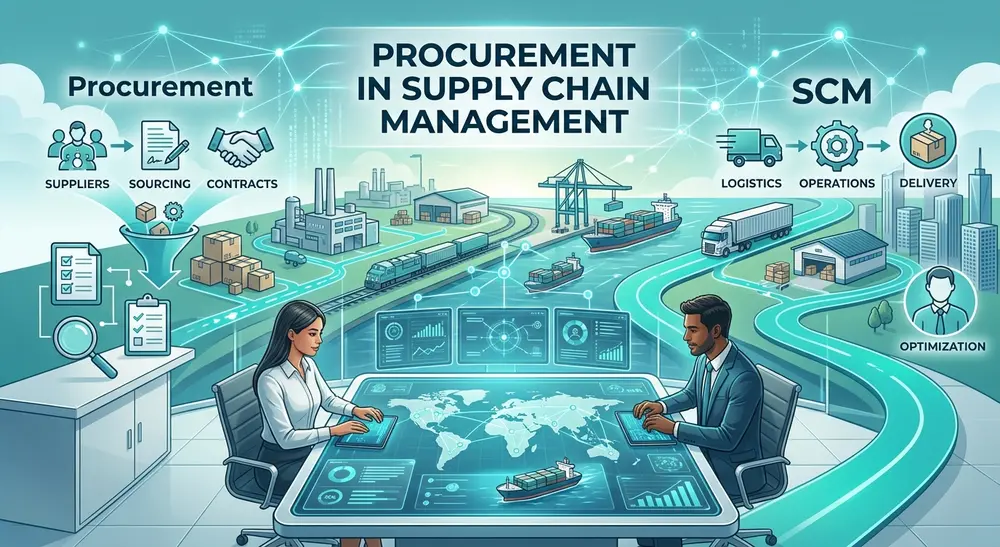
Procurement is the process by which business owners source, purchase, and manage goods and services. It also involves negotiating contracts to ensure that the company gets the products it needs on time and in the right place.
Now let’s discuss the relationship between supply chain management and procurement. Purchasing is the core focus of procurement, while supply chain management involves controlling the flow of goods from manufacturers to customers. You should choose a strategy for purchasing to improve operational efficiency and on-time delivery because purchasing plays a critical role in the supply chain.
Procurement is based on the five main points discussed below.
1. Need Identification
In this first step, businesses determine what goods or services they need to perform tasks. This can also be software and tools. You have to find out these based on goals, budget, and demands.
2. SupplierSourcing
In the next step, the team compares different suppliers based on their capabilities and experience to best hire someone who can meet quality standards and compliance codes.
3. Purchase Order
The company then issues a purchase order report that mentions the quantity of materials, quality standards, and a clarification to help the supplier understand what exactly we need. This eliminates misunderstandings and disputes.
4. Delivery & Inspection
When the products are received, the inspection team thoroughly checks the quality of the order. If any defect or damage is found in an item, the supplier will replace it before getting full payment.
5. Invoice & Payment
In the final step, the payment process is carried out within the terms of the contract. This increases transparency and builds strong relationships with suppliers.
Why Different Types Of Procurement Exist
Because every organization has different demands and challenges, there are different forms of procurement and supply chain management processes. For example, a technology company needs software and IT support, while a furniture company needs equipment and lumber import and management. You should use a systematic and smart purchasing technique for both purchases to get the required supplies without any delays or additional costs.
The following are the main factors that help you choose a specific type of purchasing process for your business.
● Industry
You must first understand the demands of your sector. For instance, a manufacturing firm usually requires raw materials, whereas a services company needs software tools and knowledge.
● Product Type
The way services and goods are purchased has different requirements. For example, if a business needs raw materials, it must establish a supply chain, contracts, and tracking. However, if you are purchasing services, you will need to pay attention to regular payments and licensing agreements.
● Supplier Availability
Now, you need to analyze who offers the goods and services you want in the market. By comparing the experience levels of multiple providers, you may swiftly select the best one. However, if there are only a few suppliers offering, you will need to select the best one carefully.
● Budget & Risk Tolerance
Before purchasing, you need to analyze your budget limits. Some businesses prefer to choose suppliers who offer low prices. But some businesses focus only on speed and quality, regardless of the prices.
9 Types Of Procurement In Supply Chain Management
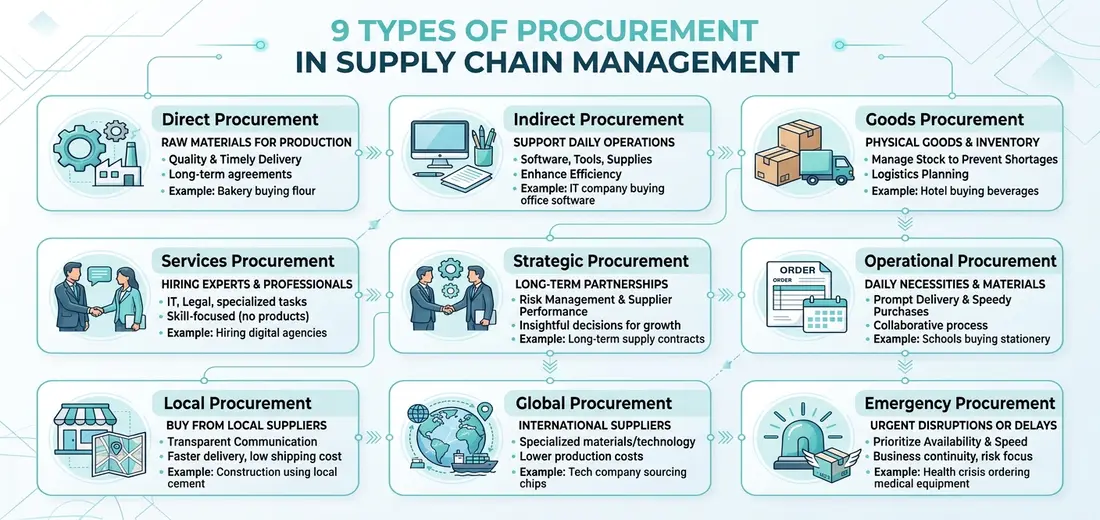
To get a clear idea of procurement types, read the content below carefully.
1. Direct Procurement
Businesses buy components or raw materials that are directly used in production through the direct procurement method. Delays may also result from component flaws and material shortages. Direct procurement specialists reduce these flaws through efficient procurement management.
Key Features
- Quality and timely delivery must be prioritized.
- A trustworthy network of suppliers is necessary.
- based on long-term agreements
Real-World Example
There are many live examples surrounding us, like a bakery that purchases eggs, flour, and sugar to make donuts, cakes, and brownies that customers buy directly.
When to Use
It is suitable for manufacturing, end-to-end construction management solutions, and food production sectors where operations are constantly operating and efficient stock is required.
Pros
Allow bulk purchasing and better inventory planning.
Improve supplier collaboration and focus on quality.
Cons
If the price of materials increases, it causes expensive products to be purchased.
Poor supply can affect the quality of products.
2. Indirect Procurement
Purchasing goods and services that are important for running daily operations. It is the process of purchasing the services for operations and not the raw materials for the final product manufacturing.
Key Features
- Improve productivity and operational efficiency
- Maintain business internal functions
- Usually involves routine purchasing
Real-World Example
A company that buys software and tools to build a product that just smooths the process, not part of the production.
When to Use
This is best if you want to run your daily operational process without any interruptions and stress.
Pros
- Supports daily office operations and business continuity.
- Improve cost efficiency and help maintain budgets.
Cons
- In this, the approval system is ignored, which causes unnecessary costs.
- This makes it difficult to analyze what ROI is achieved on certain services.
3. Goods Procurement
It is the process of purchasing physical goods such as inventory, tools, and raw materials. Most businesses rely on it to manage customer demands and maintain operational activities.
Key Features
- needs to be tracking stock to prevent shortages
- A crucial part is logistic and transportation planning
- involves coordinating suppliers to ensure prompt product delivery
Real-World Example
The best example of purchasing goods is hotel project procurement solutions, purchasing beverages, and packaged goods to serve customers. These goods can be stored to avoid hurdles in business operations.
When to Use
Industries like hospitality and healthcare use this purchase when they need physical products and supplies to keep the business on track.
Pros
- If you are buying a large quantity of product, you can save more money.
- Helps to get high-quality products and support to avoid shortages
- Full FF&E and OS&E procurement support
Cons
- Damaged products can cause poor business performance.
- Storage goods expenses can be a burden on the budget.
4. Services Procurement
Procurement of services in which businesses hire experts and professionals to perform a specific, complex task. They provide IT management and legal support that can improve efficiency and streamline the procedure.
Key Features
- You can hire experts for short periods of time without long-term contracts.
- Focuses only on the skills of the team and not on the quality of the products.
- Includes contracts and service agreements to secure the partnership.
Real-World Example
You may have often seen that some businesses hire digital marketing agencies to streamline social media management and hire an IT company to manage the cybersecurity system.
When to Use
When businesses need expertise and professionals for a specific task, they purchase services. This is usually for temporary work or employee training.
Pros
- Enables you to experience the latest software and expertise.
- Can improve overall business productivity.
Cons
- If you want to purchase services for a long-term contract, it can be more expensive.
- It can take time to find the best service providers.
5. Strategic Procurement
Strategic procurement is when you focus not only on product quality but also on supplier relationships and supply chain management for long-term partnerships. This helps you make insightful decisions to grow the business.
Key Features
- Prioritizes risk management and supplier performance tracking.
- shields you against changes in material prices and interruptions in supply.
- increases the effectiveness and quality of operational activities.
Real-World Example
A good example of strategic procurement is a bicycle company entering into long-term contracts with steel companies to ensure that the production process runs smoothly without any shortages.
When to Use
This purchase is best when you need long-term partnerships with suppliers and the best supply chain for your retail or automotive companies. Energy sector procurement expertise lies within this type of procurement.
Pros
- Fosters the development of trust between business owners and suppliers.
- Allows you to optimize ROI and manage expenses.
- Encourages improved decision-making and higher output.
Cons
- When you approach suppliers with a long-term contract, you cannot easily change vendors later.
- Finding the best suppliers and planning the purchase may take more time.
6. Operational Procurement
Purchasing of daily necessities and materials that streamline business operations and functions. It is all directly about the concern of whether the required product is in stock or not.
Key Features
- Requires protocols for invoice tracking and approval.
- Promotes prompt delivery and speedy purchases.
- Demands that suppliers, operations, and procurement collaborate closely.
Real-World Example
This is a simple example of how schools and colleges purchase stationery, chalkboards, and paper so that daily work can run smoothly and without any interruptions or delays.
When to Use
This purchasing method is used by industries that require materials daily, such as restaurants, retail, and hospitals. If they don’t get material on time, they can affect business performance and ROI.
Pros
- Secures a regular supply of necessary items and supplies
- Minimizes the delays in operations caused by material shortages
- Makes order tracking and invoice management easier.
Cons
- Repetitive purchases may diminish opportunities for cost optimization.
- Lower adjustability when unforeseen or urgent purchases are required
- Inadequate management may lead to wasteful spending.
7. Local Procurement
In local procurement, businesses prefer to buy the required goods from local suppliers. This can be within the state or country. Through this, you can get the goods with more transparent communication, on time, and without expensive shipping.
Key Features
- Expedites the delivery of goods to companies
- Strengthens long-term ties with local suppliers
- More flexibility for last-minute or urgent orders
Real-World Example
Construction companies source cement, bricks, and sand from local suppliers to avoid unnecessary delays and additional costs. This also enables construction to begin on time.
When to Use
This is perfect for businesses that want materials within budget, local trends, and code compliance. Local suppliers know what needs to be met for long-term investment.
Pros
- Encourages local businesses and economic growth.
- Control import-related delays and customs problems
Cons
- You have fewer options for suppliers in the local market than international ones.
- Restricted availability of demanding or specialized materials
8. Global Procurement
Businesses turn to international suppliers to purchase specialized materials and services that are only available in other countries. This ensures high product quality and gives you access to cutting-edge technology.
Key Features
- Helps companies save production costs and obtain competitive pricing.
- Need to handle foreign logistics and customs clearance.
- Promotes the possibility of cost savings through large purchases
Real-World Example
Most technology companies hire international suppliers to source specific types of chips and electronic components that perform well over the long term.
When to Use
In the fashion and manufacturing industries, people use it to achieve unique products and high-quality functionality. It also provides competitive advantages that save more money.
Pros
- Greater access to international suppliers
- Enables businesses to scale operations more effectively
- Improved pricing prospects via global competition
Cons
- Currency exchange risks may impact procurement expenses.
- Increased demands for logistics and transportation management
- Supply chain delays can greatly impact production timelines.
9. Emergency Procurement
Businesses adopt this procurement method when delays could cause loss and inefficiency. They just decide to immediately order products and services on an urgent basis to get the required goods as soon as possible.
Key Features
- Puts availability and timeliness ahead of cost savings
- Could involve temporary contracts with suppliers
- Strong emphasis on business continuity and risk management
Real-World Example
In a health crisis, hospitals need more medical equipment and medicines than they order the required materials on an urgent basis. This procurement delivers the products without any delay or compromise on quality.
When to Use
This is ideal in emergencies, such as when a business faces unexpected disruptions, disasters, and material shortages.
Pros
- Prevents operational shutdowns and business interruptions
- can reduce monetary losses brought on by delays
- Increases the organization’s preparedness in emergencies
Cons
- Increased expenses because of the urgency
- You can not be focused on procurement planning and budgeting
- Insufficient documentation could raise the risk of noncompliance.
Quick Comparison Table
| Type | Focus | Best For | Risk Level |
| Direct | Production inputs | Manufacturers | Medium |
| Indirect | Operations support | All businesses | Low |
| Goods | Physical products | Retail / Manufacturing | Medium |
| Services | External hiring | Service industries | Medium |
| Strategic | Long-term planning | Enterprises | Low |
| Operational | Manage daily business operations | Regular purchasing | Low |
| Local | Domestic supplies | Local compliance and fresh products | Low |
| Global | International sourcing | Large-scale operations | High |
| Emergency | Fast purchasing | Sudden shortages and quick delivery | High |
How To Choose The Right Procurement Type For Your Business?
As a cornerstone, choosing the right procurement and supply chain management strategy is essential to increasing business efficiency, building trusting relationships with suppliers, and receiving goods on schedule. However, if you unintentionally take the wrong approach, you may face costly deliveries, supply disruptions, and insufficient business growth.
Generally, there are 2 types of requirements in business, like raw materials and services. If you’re buying raw materials and equipment, direct procurement is best. And if you need services like IT support and social media management, then you should go with service procurement.
Another important factor you should consider in procurement is supplier availability. If many suppliers offer the materials or services you need, it may be easy for you to choose the best supplier based on their experience and delivery methods. But if there are only a few suppliers operating in the market, you will need to adopt the best strategy to select a vendor and avoid additional costs.
The last important thing that plays a major role in purchasing is the budget. Some businesses prefer to choose local suppliers who offer low rates for materials. But some prefer quality and safe delivery at affordable rates. It is all about your budget limits.
Ready to transform your procurement strategy?
Find out proven sourcing solutions for business growth.
Mistakes To Avoid
The following are a few mistakes that can ruin your procurement process. Therefore, you should avoid them.
- Not understanding exactly what type of content, quantity, and quality level your business needs.
- Poor communication causes incorrect orders, duplicate purchasing, and late deliveries.
- Neglecting code compliance increases the risk of legal issues and damages the business’s reputation.
Procurement And Supply Chain Management Trends In 2026
2026 is the era of competition, where every business focuses on adopting strategic procurement that can help them stay ahead in the market and maximize ROI. Nowadays, AI is at the top that business owners are adopting. It helps in automating requirement analysis, market demand, and supplier selection, which improves decision-making and progress.
The second most used tool is real-time supply chain visibility dashboards, which help in tracking supplier activities and inventory location. It also enables you to detect risk factors so that they can be addressed on time. Furthermore, nearshore sourcing is also popular among businesses. It not only reduces transportation risks but also increases the reliability of the supply chain.
Conclusion
Every company needs to understand the types of procurement, along with their benefits, challenges, and features, to know the purpose of each method. This helps them choose the appropriate procurement according to the demand and situation. When you choose the right procurement, you can manage costs, increase business efficiency, increase growth, and save more money. At Omni Build Pro, the important thing is that you don’t have to rely on one procurement throughout your business life; you have to adopt a strategy according to the needs.
Frequently Asked Question
What Types of Procurement in Supply Chain Management?
There are many procurement types in the supply chain, like direct, indirect, services, and goods. These all have different purposes, qualities, and features.
What is sole-source vs single-source procurement?
Sole source purchasing is used when only one supplier sells the products and services you need in the market. On the other hand, single-source procurement is when you choose one supplier over several because of quality and speed.
What is green procurement?
Green procurement is extremely important in 2026 due to meeting ESG requirements and strict sustainability regulations. It also builds a strong reputation for your business in the market.
How is procurement different from purchasing in supply chain management?
In procurement, you just buy the products and pay the bill, but on the other hand, purchasing is a strategic process in which you find the best suppliers, negotiate the price, and sign the contract. It is suitable for long-term partnerships.
Which procurements are best for small businesses?
Local and operational purchasing is best for small businesses because of its flexibility and low cost. In which communication and delivery are also easier compared to other procurements.
What mistakes must be avoided in procurement?
You need to avoid poor collaboration, budget planning, and failure in risk management. All of these are the causes of delays and extra costs.