
To begin with, trying to distinguish between procurement and supply chain is as difficult as trying to explain the difference between jam and jelly at 8:00 a.m. Before Coffee. Close enough?😅
Did you think that they were technically the same? No way!😱
The difference between procurement and supply chain is often misunderstood. It is not simply an innocent misconception that causes no harm, rather it may well become a project management nightmare in construction, hospitality or other projects with large FF&E components. One delay, one bad supplier, one unusual invoice of 500 door handles that nobody recalls ordering, and all of a sudden you find yourself falling behind schedule, Above the plant budget and questioning yourself on life choices.
Here is why this is important;
Industry Research Summary of the 2023 report shows 94% of Businesses’ revenue drops when their supply chain fails. Destruction can cause around 184Million annually.
This is not just a figure; this is a month’s worth of work, sour relations with the clients and the type of cost overrun that project managers lose sleep over. People begin to fall into place whenever teams are well aware of their functions in procurement and supply chain.
- Cost overruns are reduced as purchases are well-defined and supplied.
- Late deliveries are reduced since the delivery time is scheduled, and not estimated.
- Errors by the vendors decrease, as there is no longer the feeling of a game of broken telephone when communicating.
In a business of complicated structures and shopping centres, who buys what, and who is supposed to deliver what to where, can be the difference between a successful project and a miserable failure.
What is Procurement?
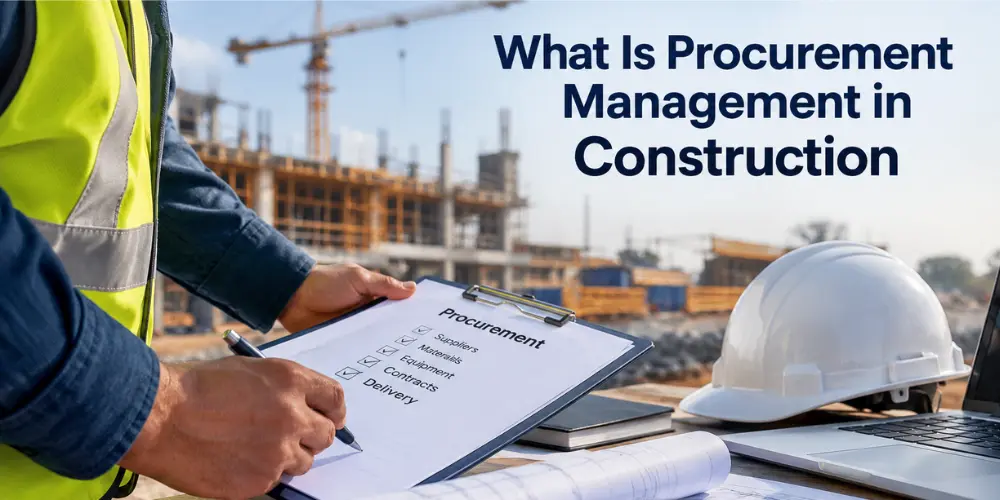
Imagine a project site, there is dust in the air, plans on the table and a site manager shouting: Where are my ceiling tiles?
So, before we put the blame on the supply chain now, let me backtrack a bit;
Who is the one who selected the supplier? Who is the person who negotiated the contract? Who did not mention exactly how large those tiles were?
And that, my friend, is what is called procurement.
Procurement is the action of seeking, bargaining and purchasing the material that you require to actualize a project, and it is not merely ordering things. Otherwise, all projects would run on time and on budget.
So what exactly does procurement cover?
Procurement includes the entire range of activities related to strategic sourcing (Identifying and selecting the best possible vendor at the lowest possible cost) to the contract negotiation (making sure to verify the contract and that there is no bite, later.) It also involves vendor management, whereby your suppliers should actually provide what they said they would deliver and not half a truck’s worth of nearly right products. In essence, procurement involves the entire procure-to-pay process(often referred to as P2P) that is the complete system of requesting, ordering, receiving and paying goods or services.
That sounds like a lot? It is, and it gets the entire project to fall apart when done incorrectly. One of the main aspects of this process is the knowledge of what indirect vs direct procurement is;
-
Direct Procurement
Items or goods that are directly entering your final product (examples: tiles, HVAC, or FF&E).
-
Indirect Procurement
Support services or supplies (that is, office supplies, Logistics partners or software licenses).
They both are vital; mess up on one of them, and someone is calling an emergency meeting.😔
Real-World Example: Hotel Lighting Procurement
Imagine you’re furnishing a hotel. Procurement is when you decide whether to buy lighting fixtures from Vendor A in Spain or Vendor B, who can deliver faster. It involves negotiating prices, delivery timelines, and responsibilities like customs duties. Think of it as strategic matchmaking, but between suppliers and your project needs.
Why Procurement Matters?
We at Omni build Pro knew what bad vendor management and unclear contracts can do to cause a downstream mess. One ill-defined provision, one lagging signature and your fit out is now ice until someone can consult with legal. This is why the best procurement does not always mean the lowest prices; it involves foresight, processes and understanding which components of your project would leak before it could be too late and cause the whole project to flood its schedule.
By using Procurement Outsourcing Services to manage overheads in the sourcing process, many companies streamline their vendor selection processes and P2P systems and save not only money but also substantial Monday morning headaches.
📈 Did you know?
According to McKinsey & Company, Procurement Outsourcing can reduce costs by 4 to 6% in just 2 years.

What is Supply Chain Management?
Supply Chain Management (SCM) would be the lovely art of moving it from here to there on time, intact and with the hope of not getting emails like we lost the shipment.
The point is that the SCM is concerned entirely with the flow of goods and information; raw material into the finished product, factory floor to places of consumption. It is the governor who makes sure that the projects do not turn into a logistical nightmare.
To comprehend the difference between procurement and supply chain, one should consider SCM as a larger system.
Procurement makes up only a small portion of it. SCM encompasses Logistics and transportation to inventory management, warehousing and fulfillment and monitoring of delivery schedules in real time and more. It is similar to the backstage staff of a play; nobody sees it, but without the staff, the play never takes place.
So, what is covered by SCM?
Supply Chain Management makes sure that:
- Materials are ordered, tracked and shipped and delivered on time.
- Inventory is not unthinkingly held to an optimal level.
- Both space and security will be planned for storage and warehousing
- Customs, regulations and international shipping schedules are also put into consideration before you are subjected to a 2-month delay..
And here is the kicker:
The 2023 Insight Report of Industry Logistics tells us that only 6% of companies have full visibility across their supply chain. Yet, poor visibility is one of the top cost drivers. Yes, it means that 94% of teams are more or less winging it.
When SCM becomes complicated
In more focused zones, such as renewable energy procurement, matters may be more complex. Now you have operations across borders, multiple cross-border delivery schedules and a tumble through customs regulations as a game of supply chain. If a single block goes wrong, the entire thing shakes.
That is where SCM excels: Getting all of those moving parts to work together in a system that functions(mostly) efficiently. Or at most does not give you panic attacks every day.
Why it matters
Consider SCM like the control tower in the airport. It does not fly the planes but ensures that they depart, go into the air and touch ground without colliding with those of the other flights. The best procurement judgements cannot take a project off the rails without effective inventory management and a clear line of sight into logistics and transportation.
Whether we like it or not, production procurement selects cast and the supply chain management ensures that they appear timely with all their lines learned and the correct costumes on.
Confused about procurement vs supply chain?
Let our specialists guide your next project.
Key Differences of Procurement Logistics and Supply Chain Management
I often think of procurement logistics and supply chain management as two parts of the same story. What happens before a product finally arrives where it needs to be?
Behind the scenes, both functions work together to turn a concept into a finished result.
- Procurement acts as the brain, deciding what to buy, from whom, at what cost, and under what conditions.
- The supply chain is the muscle, responsible for moving materials across time zones, managing warehouses, handling customs, and ensuring everything arrives on schedule.
When they work in sync, decisions made at the negotiation table translate smoothly into results on the ground, helping businesses maintain cost control, efficiency, and reliability across every project. Together, they ensure that every purchased item arrives on time, within budget, and in perfect condition. To be clearer, here is a little comparison:
| Procurement | Supply Chain |
|---|---|
| Vendor Selection | Inventory Management |
| Contract Negotiation | Warehousing |
| Procure-To-Pay | Logistics |
| FF&E and OS&E Sourcing | Global Transport |
| Strategic Cost Saving | Operational Efficiency |
The Table might give a nice reflection; however, do not be deceived, these functions are closely interwoven. An example is when procurement chooses a supplier who delivers to a distant location where logistics can be unreliable, then it is automatically a supply chain nightmare.
Similarly, effective inventory management may disrupt purchase schedules, meaning procurement may have to renegotiate order replacements urgently. The tools, too, are subject to change as the industry changes.
According to CorexCorp, 87% of firms now use e‑procurement tools, and approximately 85% of companies using AI in procurement see a 20% improvement in forecasting accuracy.
It’s not paper pushing anymore; it’s a data-driven strategy that directly feeds into operational excellence.
Why These Differences Are Significant
The process of procurement chain management can also have a direct impact on the speed and agility of the process as a whole. Selecting the appropriate vendors is not all about the most competitive price, but also the realisation of their warehousing and delivery capacity, as well as the capacity to commit as the project expands.
For example, processes in certain industries, such a development, require a specialised Spa Procurement Solutions to correspond with fluid supply processes, so the ability to accommodate custom tiles, steam units, or luxury fixtures is delivered on time. One delayed delivery, and the big deal blows into a soft opening with plastic chairs. Put it like this;
- Procurement entails what you purchase, who you purchase and how you make payments.
- Supply chain is concerned with how it should reach you, when it should reach you and what should happen in case of a mishap.
The two are crucial. They both involve strategy, and when they are done well, both of them help the project seem as though it all just went successfully.
You may also like: Difference Between Procurement and Purchasing — Learn how understanding this distinction can improve your supply chain efficiency.
Supply Chain Management vs Procurement: Real-World Application
You are familiar with theory, but how does supply chain management vs procurement resemble reality? How about giving a walk-through of a typical FF&E Installation of a hotel lobby?
The ones with the smooth chairs, lighted reception areas and light fixtures that can only be touched by authorized personnel and look so suspiciously expensive.
So now think about how you would go about it without having procurement and supply chain working together. It is as though one is unnecessarily ordering a five-course meal and does not specify the time of arrival of the guests at the kitchen.
Real-World Example: Hotel FF&E
Step 1:
Procurement leads the way, there are the vendors to decide on, the furniture, fixtures and that beautiful imported Italian marble check-in desk. The bargain prices, managed contracts and warranties, and the terms of delivery are secured through supplier relationship management.
Step 2:
Welcome to the supply chain management department. Now this is getting real; delivery timelines, shipping goods through various vendors, inventory management at the staging warehouses and ensuring that nothing is lost somewhere in the mess.
This is the magic behind the scenes:
- Procurement guarantees that the material is bought wisely.
- The supply chain makes sure that they arrive, undamaged, on time and in sequence.
Our experience in the management of a complex hotel lobby and educational establishment shows that purchasing failures are widespread and usually originate due to improper logistics. A single late delivery or a lost customs document, and the entire schedule will change in the process, as well as the temper of the client.
It is not all theory, either.
Companies with strong Procurement SCM alignment are twice as likely to meet project delivery targets. That is not a matter of luck or chance; it needs common systems, communication and clear exchange of goods and information between departments.
FF&E Projects: It is All About the Timing
Both FF&E and OS&E Procurement are needed to support large-scale projects through sharp supply chain coordination to avoid bottlenecks. When departments fail to communicate, what you end up with is tables being delivered when the floor is still not complete or mirrors that arrive two months later. It is like playing Tetris with one’s eyes closed; things will form, but not in a constructive manner.
The supply chain management vs procurement is not merely an issue of the glossary, but a matter of practice as well. The supply chain determines how and when it moves; procurement determines what moves. Both of these entities need to be functioning well to turn and make the most luxuriously.
Why Understanding the Difference Matters
It is not a sugarcoated statement; A little mistake on a big project may have a big fat price sticker, and when such mishaps are caused by the lack of understanding of roles between procurement and supply chain teams, the outcome is often nasty.
Without realising the distinction between procurement and supply chain can lead to misallocated responsibilities, job duplication, uncertainties in shipping and the propensity to blame others, ending up being slowed down more, especially when the clock is ticking. It is not just some minor inconvenience.
According to Operational Cost & Risk Analysis, A 3-5% EBITDA hit is common even for minor supply chain delays. Major issues can wipe out 30-50% of a project’s Profitability.
This is more than a dent; this is the hit that will make you reconsider the whole build in the eyes of the stakeholders.
Medical Projects that went off Track
Consider hospital FF&E installation services. They are the projects on which time is the biggest factor, since all the cabinets, beds, or other fixtures must be put in place on schedule according to the schedules of the medical staff and the inspections.
Single setback in the procurement process, e.g, a misunderstanding of lead times by a vendor, a snag in supply chain fulfillment, e.g, equipment at customs, and the hospital can no longer open the doors. Patients wait, employees cannot move in, machines lie in warehouses, and cost counters continue running. It is the type of delay that not only creates frustration but also bleeds budgets, breaks schedules and creates bruised reputations.
Why must all of this be known?
Whether you are in charge of a commercial fit-out, a hospitality rollout, or a HealthCare expansion, an appreciation of the workflow split into procurement and supply chain is no longer a technical issue but an approach.
Successful Projects are the ones where teams have answers to such questions as who is buying, who is tracking and who is delivering, and they communicate with each other before something gets lost, late or misquoted.

How Omni Build Pro Streamlines Procurement & Supply Chain Together?
At this point, procurement and supply chain are two pieces of a very costly jigsaw puzzle.
What happens when they don’t fit quite right?
You get budget overruns, delayed handovers, and endless emails asking where the shipment is.
That’s where Omni Build Pro steps in. We don’t just explain the difference between the two functions; we make sure procurement and supply chain work together from contract to completion. Whether it’s a hospitality rollout, healthcare facility, or multi-campus build, we operate as one cohesive team, not two departments tossing files across the table.
Whether it is procuring educational furniture, fixtures and equipment or scheduling the organization’s full-scale hospitality FF&E installation services, our staff makes procurement decisions, and the execution of the supply chain works parallel, not sequentially.
No last-minute upheavals, no extinguished deliveries. It is a more intelligent, more open procedure that can grow with your project. Because at the end of the day, understanding the difference between procurement and supply chain is only half the story, executing both seamlessly is where Omni Build Pro thrives.
Frequently Asked Questions
Is procurement part of the supply chain?
Yes, procurement is said to be part of the greater supply chain. As provided above, procurement takes care of sourcing, selection and procurement of goods or services, whereas the supply chain takes care of the complete flow of goods and information, i.e, logistics, warehouses and the delivery schedule. Consider that procurement is the strategic point of departure into the greater supply chain.
What comes first: Procurement or Supply Chain?
Procurement usually precedes everything in a project; you cannot plan how you will store, ship and deliver what you will need unless and until you offer and then get the right items.
As another example, in a hotel construction project, you select FF&E suppliers, negotiate the contracts, and fix the prices (Procurement) and then you have to set up the transportation and warehouse (Supply chain). It makes a rational order, buys, then moves.
What are the main Differences Between Procurement and Supply Chain Management?
Procurement refers to who you purchase from and in what manner, such as vendor selection, contract negotiation and procure‑to‑pay process, whereas supply chain management is concerned with how all these things flow to where they must flow; inventory management, logistics and transportation, warehousing and the timing of operations.
The two functions are mutually related but differ so much in their reflection on the bigger success of a project.
How do Procurement and Supply Chain Work Together in Construction Projects?
Imagine you are constructing an office space. Procurement is in charge of ordering all the things, chairs, lamps, carpets and ensuring that you do not pay twice to receive them. Then the supply chain management steps up to organize warehousing and delivery, delivery schedules, and the drop-off site in a way that does not obstruct other trades.
This helps to drive required items as per the right order in the job where FF&E is used in large quantities, e.g, floors, furniture, partitions, before decorations, etc, in FF&E-heavy jobs will not be blocking the way, or creating congestion at the site.