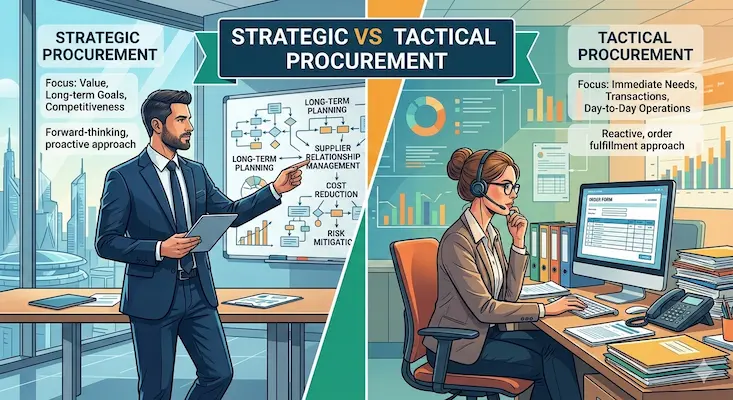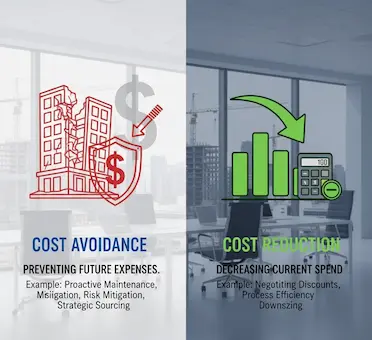

If you are wondering what a Project Procurement Management Plan is? Then you are in right place. A Project Procurement Management Plan is a plan that follows a pattern of explaining how a project will identify its needs, source the appropriate suppliers, manage contracts and performance tracking from the beginning to the end. In construction, this is not an optional plan. It is essential. All the options of materials, machines, and subcontractors affect the project time, quality, and cost. This is why the Procurement Management Plan of a Construction Project is strong and can make teams remain in order, minimize the risks, and prevent surprises.
Research conducted in the industry indicates that procurement may take 40-70 % of the total construction project expenditure.
Why a Procurement Plan Matters in Construction Projects?
Every successful construction project is based on a sound procurement plan. Lack of clarity in the procurement process results in delays, cost overruns, and quality issues in the teams. The construction sector already operates under a tight schedule and high reliance on suppliers. Any error in the procurement life cycle will delay the whole project.
The factual information proves the importance of such planning. There are studies that show that 75 % of construction projects experience delays in supply chains.
Such delays are usually caused by the fact that materials are ordered and received in wrong quantities, or by incompetent suppliers. According to McKinsey, 10-30% of time and cost overruns are attributed to poor procurement practices.
It implies that it does not take long before a weak plan demolishes both budgets and schedules. An adequate procurement strategy helps in the management of the supply chain. It assists teams in selecting the appropriate suppliers, follows up on the purchase schedules, avoids shortages, and manages costs. It also establishes openness amongst the contractors, suppliers and the owners of the project.
We emphasize total coordination in all the construction stages. This is the reason why our end-to-end construction services can be used in the creation of procurements, planning and management of suppliers to make sure that they remain in line with the objective of the project.
A good plan reduces stress and an excellent plan defends all of the project.
9 Steps of a Project Procurement Management Plan
Step 1 – Plan Procurement with a Strong Make-or-Buy Analysis
Making decisions on what your team is going to do in-house and what is better outsourced is the first step towards creating a solid Project Procurement Management Plan. The decision-making process starts with a well-established and organized make-or-buy analysis. Here is always where we begin at Omni Build Pro, since it safeguards project budgets, avoids time-wastage, and assures the appropriate tasks are assigned to the appropriate professionals. McKinsey estimates that up to 15% of cost overruns occur with projects that have poor procurement planning.
What Is Make-or-Buy Analysis?
A make-or-buy analysis can assist you in determining whether it is wiser, quicker or less expensive to:
- Make it in-house: with your own team, equipment, and resources.
- Outsource it: using specialized vendors, contractors, or service providers.
Real Example: How a Wrong Decision Causes Overspending
Take an example of a residential development project. The internal team would choose to make the window frames on the spot rather than contracting a specialist vendor. They undervalued the man-hours, equipment requirements, and wastage of materials.
Result?
- Production delays
- Additional labor costs
- Quality issues
- Rework
How We Do Make-or-Buy Analysis at Omni Build Pro
We follow a clear, handy checklist:
1: Define the Requirement clearly
- What exactly is needed?
- What are its skills, materials, or equipment?
2: In-House Capability vs Supplier Capability.
We evaluate:
- Skill level
- Availability
- Equipment capacity
- Past performance
3: Review Total Cost of Ownership (TCO)
Not just initial cost, but:
- Labor time
- Overheads
- Waste
- Logistics
- Rework risk
- Storage costs
4: Assess Time Impact
Outsourcing may be faster.
In-house production can be more adaptable.
We compare both.
5: Check Quality Expectations
Specialty vendors tend to deliver a better output, particularly in technical scopes.
6: Review Project Constraints
Budget, schedules, human resources, and risk status.
Linking This to Procurement Methods and Strategies
After making the decision, we choose the appropriate procurement means/methods, which include:
- Competitive bidding
- Request for Proposal (RFP)
- Direct purchase
- Subcontracting
- Framework agreements
- Supplier long-term alliances.

Step 2 – Define the Procurement Process & Lifecycle
Once the decision on what to outsource has been made, the second thing is to map the procurement process. No construction project can run efficiently unless all the parties are aware of how procurement operates throughout. The lifecycle will always begin with the need for identification of the project. This may be materials, equipment or a special subcontractor.
After confirming the need, we establish the requirement in detail. Once the requirement is defined, we proceed with the market research. Good research will assist in eliminating unreliable vendors, and this will see us go to only the vendors who are able to meet the requirements of the project. Then there is supplier identification and assessment. This is where potential suppliers are shortlisted in terms of capability, quality and reliability. We rely on simple and effective requirements like:
- Performance history
- Certifications and compliance.
- Delivery reliability
- Safety and quality records
The evaluation step follows. Price is important, but it is not the only one. We consider proposals on the basis of:
- Delivery schedule
- Warranty and support
- Material quality
- Risk factors
- Contract terms
The lowest-priced supplier who is not very reliable may ruin a construction schedule. This is the reason why our process of evaluation is always balanced and practical. Then the buying and implementation process begins. Here, purchase orders are issued, progress is tracked, compliance is checked, and the supplier is made to meet all the requirements.
Contract closeout is the last procurement lifecycle stage. This involves ensuring that all items or services delivered are verified, checking on performance, invoice closing, and recording of lessons learnt. This step assists us in enhancing future buying processes and enhancing relations with suppliers.
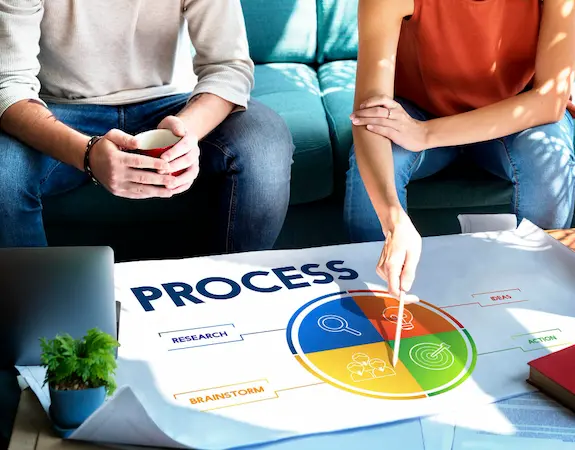
Step 3 – Supplier Selection & Evaluation
One of the most crucial components of the Project Procurement Management Plan is choosing the right suppliers. Ensuring the project is not delayed, having cost problems and quality problems is well shielded by a robust supplier selection/evaluation process. We do not take this step lightly since the success of the whole project is dependent on the reliability of the vendors we employ.
Why Supplier Selection Matters in Construction
Construction works operate on materials, equipment and specialized services. The failure of one of the suppliers may collapse the whole schedule. Research indicates that 54% of contractors expanded on collaborative sourcing of suppliers in 2024.
Good suppliers reduce risk. Weak suppliers create chaos. This is the reason why a rigorous process of selection is needed.
How We Start the Supplier Selection Process
We draw a shortlist of possible suppliers at the start of each project. Such a list is based on reputable networks, past project information, performance history, and research on the market. After shortlisting, we undergo evaluation.
We do not choose a supplier on the price basis. We review capability, track record, capacity and compliance. All the suppliers should be able to fit the technical and quality specifications of the project and proceed.
The key Supplier Evaluation Criteria
Our assessment system is not complex but efficient. We pay attention to the factors that do, in fact, have an effect on project performance:
- Capability & Expertise
Is the supplier competent in terms of skills, equipment and experience? We test the quality of previous jobs, credentials and technical prowess.
- Delivery Performance & Reliability.
Construction requires deliveries on time. We gauge the track record of the supplier to meet the deadline and the capacity to respond to a sudden demand.
- Quality Standards
We examine the quality of materials, production processes and inspection systems. When they are below par, the project goes wrong.
- Financial Stability
A financially strained supplier can collapse in the project. We analyse financial health to achieve stability in the long-term.
- Safety & Compliance
We check on safety certifications, regulations, and environmental practices.
- Pricing Structure
Price is important, but it has to be equivalent to value. We do not compare the lowest quote only; it is the total cost.
Vendor Management Throughout the Project
The process of supplier choice is not only the start. Good vendor management ensures the stability of the relationship during the project. At Omni Build Pro, we:
- Ensure there is effective communication.
- Monitor the achievements of performance against KPIs.
- Monitor delivery schedules
- Address issues quickly
- Document every interaction
This continues to be managed, and the trust is built, and there are no significant disruptions. Suppliers perform better when they understand expectations and when they observe the same constant communication.

Step 4 – Contract Type Determination
One of the most critical steps in any construction procurement plan is to make the right decisions on the types of contracts. A contract is not a document; it is a risk-administrator, a costing plan, and a performance model combined into a single document. That is why our team analyzes the procurement lifecycle, supplier capabilities, and complexity of the project and then finalizes the best option.
1. Fixed-Price Contracts – Best for Defined Scope
Fixed-price contracts are ideal in cases where the project scope is well defined, drawings are finished, and in situations where there are minimal possibilities of design changes.
Why we use it:
- Predictable budget
- Lower risk for the client
- Good at routine or standard work.
Where we use it: The interior finishes, MEP installations or any job with definite quantities are normally recommended to have a fixed price contract.
2. Cost-Plus Contracts – Best for Complex or Uncertain Projects
Cost-plus (cost+) contracts are contracts that compensate the contractor for the actual cost of the project, together with a profit margin or fee.
Why it works in certain cases:
- Flexibility where the scope is not outlined completely.
- Suppliers do not have to overcharge regarding unidentified risks.
- Easy to accommodate changes
Where we use it:
Cost-plus contracts are used in early-stage constructions, renovations or when the material supply is not known.
3. Time & Materials Contracts – Best for Short-Term or Specialized Work
The T&M contracts are best when you require fast deployment of labor or expert skills, and when it is hard to estimate the costs beforehand.
Where we use it:
- Emergency repairs
- Technical duties of a special nature.
- Minor work packages that need flexibility.
How We Choose the Right Contract Type
We align contract strategy and project goals by evaluating:
- Scope clarity
- Supplier reliability and past performance.
- Budget flexibility
- Project risks
- Timeline sensitivity
The idea is quite straightforward: select a contract framework that keeps your budget, helps to work in a harmonious environment, and ensures that the project will not come to a halt due to conflicting sides.
Step 5 – Risk Management in Procurement
In the case of construction projects, the best plan will fail when the risks are not established early on. It is the reason why risk management of procurement is one of the key aspects of our working process. This will assist us in avoiding time wastage, unnecessary expenses and making sure that our suppliers do not give us anything different than what the project requires. According to a study carried out recently, 70% of residential projects are conducting procurement risk management at a rate of below 50% effectiveness.
How We Manage Procurement Risks at Omni Build Pro
Our proactive step-by-step approach follows the construction procurement lifecycle. It is not just about minimizing the risks but about creating a better and more reliable supply chain.
1: Identify Risks Early
We begin by checking drawings, BOQs, supplier data and market conditions. This assists us in enumerating all the risks that may occur, such as a shortage of materials or currency fluctuations. The sooner we detect, the better preparedness we are to develop mitigation strategies.
2: Prioritize and Classify Risks.
Not every risk is impacted equally.
We classify them as:
- High impact: failure of the supplier, significant delays.
- Medium impact: quality problems, minor differences.
- Minor effects: administrative slackness.
3: Use Strategic Sourcing
With strategic sourcing, we are certain to develop backup strategies, multiple suppliers and long-term relationships. This provides our clients with stability, a competitive price and less reliance on a single vendor.
Some strategies we use:
- Multi-supplier sourcing
- Preparing trustworthy suppliers.
- Developing price contracts of long duration.
- Supplier performance benchmarking.
4: Reducing risks on a contractual basis.
Our contracts are aligned with project risks. In high-risk items, we also have a provision of penalty, performance guarantees, replacement time scale, and quality assurance. This makes contracts formidable instruments of risk control.
5: Continuous Monitoring
Risk management does not end with taking the order.
We track:
- Lead times
- Supplier performance
- Quality inspections
- Market changes
- Delivery schedules
Result: A More Reliable Procurement Framework
Our procurement team has proactive risk management that guarantees:
- Fewer delays
- Controlled costs
- Higher material quality
- Better supplier responsibility.
- Smoother project execution

Step 6 – KPI Definition & Performance Metrics
The evaluation of the effectiveness of a procurement plan is as significant as its development. That is where procurement KPIs / metrics come into the picture. We also apply performance measures to monitor the suppliers, keep track of the project efficiency, and guarantee that every purchase meets the quality, schedule, and cost targets. The most perfect procurement plan may not produce results without clear KPIs. In construction, the metrics that are regularly used are the on-time delivery of suppliers, the accuracy of invoices, and compliance with the contract.
Key Procurement KPIs We Track at Omni Build Pro
Our variables are a combination of operational, financial, and compliance measures:
- Supplier On-Time Delivery: Measures time control concerning deliveries and milestones.
- Invoice Accuracy: Checks against incorrect billing and minimises disputes.
- Contract Compliance: Monitors compliance with terms and conditions.
- Quality Performance: Measures defect rates or non conforms.
- Procurement Cycle Time: Estimates the efficiency in terms of requisition to delivery.
- Cost Variance: Comparisons of planned and actual expenditure.
- Supplier Responsiveness: Measures the speed of communication and problem-solving.
How We Implement KPIs
At Omni Build Pro, it is not enough to define KPIs. We integrate them into the purchasing process to track the progress regularly:
- Establish Achievable Goals: There are markers of success for each KPI.
- Reporting on a regular basis: weekly or monthly reports create transparency.
- Use Technology: Procurement dashboards monitor real-time performance.
- Feedback Loops: Suppliers and internal teams examine outcomes and manipulate approaches.
- Continuous Improvement: KPI knowledge is used to make future procurements.
When our clients are in need of professional assistance, we also can provide professional procurement services that assist in defining KPIs, controlling the performance of suppliers, and simplifying the overall procurement life cycle.
Outcome of Effective KPI Management
Through the measurement of the right things, projects enjoy:
- Better supplier performance.
- Reduced cost overruns
- Fewer delays
- Better contract compliance
- Higher project quality

Step 7 – Procurement Schedule & Timeline
The schedule/timeline of procurement is well-developed, which is the key to ensuring that construction projects are not delayed. We know that the slightest delay during procurement can be reflected in the whole project. It has been found that about 30-35% of project delays are procurement-based which points to the necessity of thorough planning and implementation.
The procurement schedule will determine the time required on-site for all materials, equipment, and services. Lack of a clear timeline may lead to deliveries being too early, leading to storage problems, and too late, which stops the construction work. This is also reflected in job-site budgeting, where there are frequently unforeseen delays that can raise the cost of labor, storage charges or expedited orders. An active timetable will keep resources on hand when they are required, will minimize downtime and will keep teams within their budget limits.
How We Create an Effective Procurement Timeline
At Omni Build Pro, the process is divided into distinct steps:
1. Determine Requirements Early:
All the materials, tools and subcontractor services are mapped with project milestones.
2. Estimate Lead Times:
They include supplier lead times, shipping time and possible delays.
3.Integrate With Project Schedule:
The procurement schedules are matched with the construction works to avoid any disjunctions or downtime.
4. Include Buffers:
To avoid last-minute problems, we take into consideration the unexpected delays or shortages.
5.Coordinate With Suppliers:
We are updated with vendors regularly, which enables us to change the schedule in real time when necessary.
Example: Avoiding Costly Delays
In a home building, flooring materials were not ordered on a schedule. Delivery was two weeks behind arrangement causing a stop in several trades and raising labour expenditures. This project had overtime and hurried logistics, which saw it go off-budget by 12%. These delays and additional expenditures would have been prevented in case appropriate procurement schedule had been adopted.
Step 8 – Procurement Documentation
A successful construction project must have proper procurement documentation. We understand that effective and readable documents ensure no one misinterprets the message, it facilitates the responsibility of the suppliers, and enhances the efficiency of the entire project.
Key Procurement Documents
1: Request for Proposal (RFP)
RFP is applied in cases where the requirements of a project are complicated, and there are several solutions to the problem. It should include:
- Background and objectives of the project.
- Deliverables and scope of work.
- Foreseen deadlines and achievements.
- KPIs and performance standards.
- Submission regulations and evaluation standards.
2: Request for Quotation (RFQ)
An RFQ is to be employed when the scope and specification are clear, and the primary objective is to compare prices. It should include:
- Comprehensive list of materials or services.
- Quantity and specifications.
- Delivery schedule
- Payment terms and conditions
3: Statement of Work (SOW)
The SOW outlines the tasks of the supplier and the project team. It should cover:
- Detailed task description
- Deliverables and deadlines
- Quality requirements
- Escalation procedures and reporting structure.
- Terms and conditions
Integrating Cost-Benefit Analysis
Value and not price should be taken into consideration in every procurement decision. We review:
- Total cost of ownership (logistics, installation, maintenance)
- Quality vs. price comparison
- Supplier reliability and risk factors
- The long-term effect on operations.

Step 9 – Procurement Closeout
Procurement closeout is the last procurement management plan action step. We consider this step as a crucial step to making sure that each contract, engagement of suppliers and each purchase order is completed, reconciled and documented at Omni Build Pro. Closeout does not just complete financials but also provides insight into the next project to aid in the improvement process, thereby establishing a continuous improvement process.
Procurement closeout is neglected by many teams, which are interested in delivery and implementation only. Nevertheless, the incomplete closeout may result in unresolved conflicts, unpaid money, and unlearned lessons. Organized closeout technique cushions the project against the risks that are left over and provides accountability.

Procurement Technology & Automation
In modern construction projects, speed, accuracy and transparency in all procurement actions are required. This is why the technology of procurement/automation is turning out to be a game-changer. We use an intelligent system at Omni Build Pro to facilitate process optimization, minimize errors and enhance overall performance by the suppliers. Research indicates that 89% of procurement departments complain of the inefficiencies of manually controlling vendors. This is a clear indication of the necessity of automated solutions in complicated constructions.
Automation assists the teams that work with significant amounts of orders, follow several suppliers, and control the adherence to the contract without the time-consuming delays and errors that traditional processing presupposes. With the inclusion of automation, we improve the visibility, decrease the risk and enable project managers to concentrate on strategic decisions instead of operational duties.
Invoice Matching & 3-Way Matching
Invoice matching / 3-way matching is a major attribute of the current procurement technology. This is the process of matching the purchase order, the invoice of the supplier, the delivery receipt, and the payment has not been released. At Omni Build Pro, it is done so that it guarantees:
- Billing and cost verification veracity.
- Before payment, detection of discrepancies.
- Less potential to be overpaid or commit fraud.
- Supplier disputes are resolved faster.
Through the use of 3-way matching, we have control over money and have better trust in the suppliers.
Integration With Project Management
The concept of automation does not exist in a vacuum. It fits perfectly with project schedules, budgets, and milestones. Our team is to align the procurement technology with the construction workflow to make sure that all materials, services, and payments correspond to the project schedule. To offer our clients total support, in need of construction project management support, our procurement automation, applied with the construction project management support team, will provide real-time visibility, coordination, and efficiency throughout all project phases.
Professional Procurement Services by Omni Build Pro
Omni Build Pro is a company that prides itself on providing professional procurement services that streamline thorny construction projects and provide quantifiable outcomes. Years of industry experience, developed procedures, high-tech equipment and a strategic procurement process are the elements that have enabled our team to become a powerful force in the industry.
To the clients in the hospitality, commercial or energy industry, procurement is not just the process of buying materials, but the provision of quality, efficiency and reliability. We have been involved in complete FF&E / OSE procurement of hotels and offices, restaurants, and so on. This will make the project run without any surprises, minimize cost overruns and improve the efficiency of the project in general.
Real-Life Procurement Solutions
Hotels: Our team plans and implements entire procurement workflows for hotels [hotel page]. We deal with furniture, fixtures and equipment (FF&E) to operational supplies and services. Every procurement decision is traced on project schedules and cost projections, allowing for continuous handovers and avoiding any disruption.
Offices: In business premises, we specialize in budget planning for office procurement [office page]. This entails ergonomic furniture, IT equipment and fit-out services, which are taken and sourced in order to maximise on cost, quality and project timelines.
Restaurants: We take care of all the kitchen equipment and dining furniture, as well as operational supplies, so that the restaurants are functional on the opening day.
Industry & Energy Projects: Our group offers specialised procurement services to the industrial and energy sectors. Using our experience in industry and energy procurement [energy procurement page], we find good suppliers, deal with long lead equipment and control adherence to technical and safety standards.
Why Clients Choose Omni Build Pro
- Professional Staff: Our experts are experienced in several industries with many years of practical experience.
- Structured Processes: All the procurement stages are standard and monitored, starting with planning to close out.
- Supplier Network: Good vendor relations provide good prices and delivery.
- Technology-Driven: We have automated procurement systems to track, match invoices, and monitor performance.
- Customized Solutions: Every procurement plan is specific to the project type, scope and budget.
ready to get started now?
Get in touch with us and learn more about customized procurement management solutions and how our organized way of doing business can make your upcoming project be on time, on budget, and on quality.
Frequently Asked Questions
1. What is a Procurement Plan in Project Management?
A procurement plan is a project management document that defines the acquisition of goods, services and resources of a project by the project through external suppliers. It is used to make sure that procurement is aligned to project objectives, minimize risk, manage costs, and enhance supplier relationships.
2. What are the key steps in developing a procurement management plan for a construction project?
The construction of a procurement management plan is a process that consists of 9 steps:
- Plan procurement and make-buy analysis.
- Establish the process and lifecycle of procurement.
- Carry out supplier selection and assessment.
- Identify the types of contracts and negotiation strategies.
- Determine and deal with procurement risks.
- Delineate procurement KPIs / performance measures.
- Develop a procurement schedule/timeline.
- Make comprehensive procurement documentation (RFP, RFQ, SOW)
- Perform procurement close out, financial reconciliation and lessons learned.
3. Which KPIs should be included in a procurement plan to measure performance?
The important KPIs / metrics in procurement to be followed are:
- Supplier on-time delivery
- Cost variance versus budget.
- Invoice accuracy
- Contract compliance
- Quality of materials or services.
- Change orders or disputes
- Number of change orders or disputes
- Procurement cycle time
4. How can procurement risk be managed in construction projects?
The procurement risk management is the process of identifying the possible risks, including price volatility, supply chain delays or quality risks. The mitigation measures are signing long-term supplier contracts, keeping buffer lead times in the purchase schedule, supplier dependency reduction by diversification, keeping a risk register and a governance structure.
5. How does procurement technology help in managing procurement performance and cost?
Procurement technology/automation enhances efficiency and accuracy because they allow live order and delivery tracking, automated invoice matching / 3-way matching, order management centralization, supplier dashboard and performance tracking and fewer mistakes and more effective communication.
6. What happens during the procurement closeout phase, and why is it important?
Under procurement closeout, the delivery of services, invoice reconciliation, and performance review are done by concluding all the contracts, verifying deliveries and services, and finalizing the invoices. The lessons learned are recorded, the liabilities are absolved, and the records are stored. This stage ensures accountability and enhances supplier relationships, and can be used as a basis for future projects by developing an efficient and risk-disciplined procurement process.