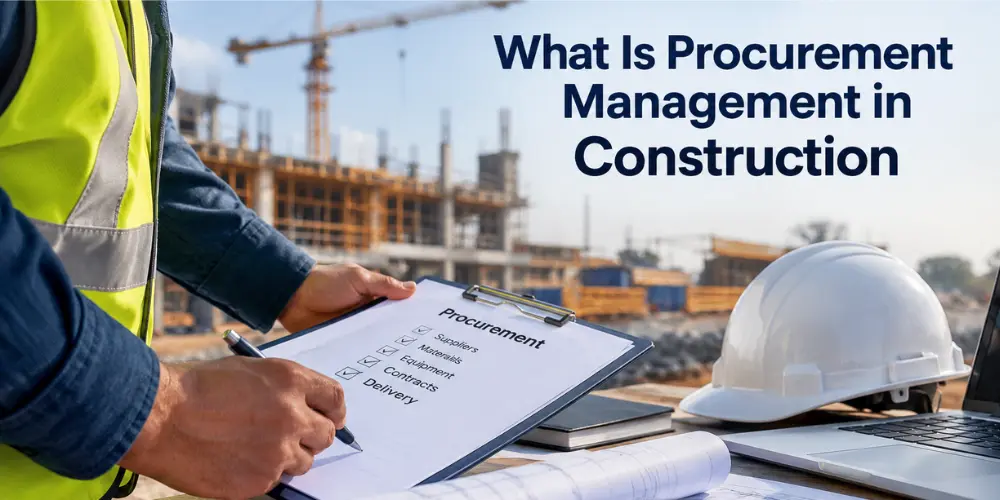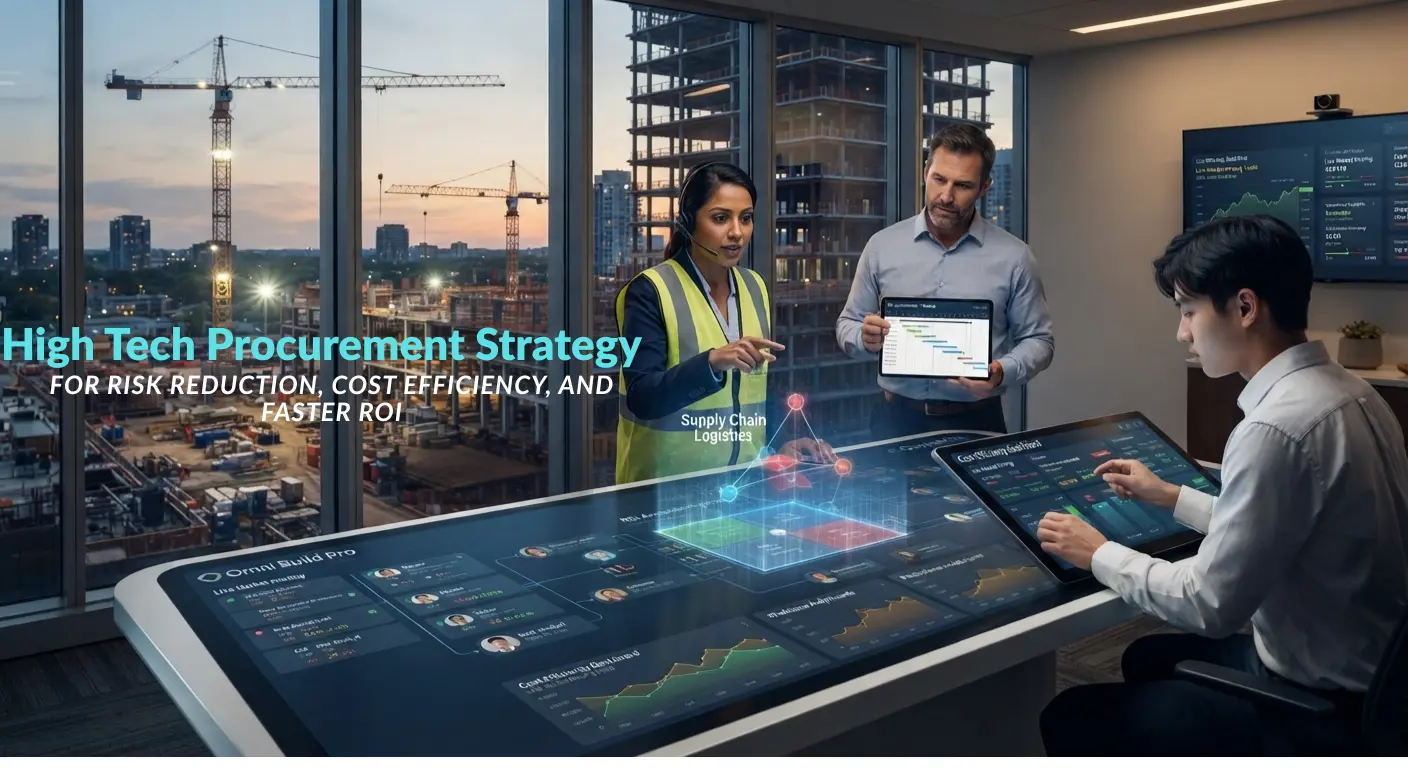

In the current uncertain market, Procurement in Supply chain management is not merely about purchasing the material but maintaining projects on track when each slippage can be costly in terms of time, money, and customer confidence. Global supply chains are now complex networks of suppliers, information systems and logistics suppliers. And when a single link is broken, the entire machinery feels it.
McKinsey (2024) reports that almost 90 % of organizations experienced supply chain disruptions over the last year.
That figure on its own demonstrates the reason why a robust procurement operation has become a business imperative. By 2025, firms that consider procurement a strategic rather than a transactional endeavor will be at a clear-cut benefit in mitigating risks as well as reducing costs.
Definitions: Procurement in Supply Chain Management
Procurement refers to the systematic process of identifying, sourcing, negotiating, and acquiring goods or services that a business requires in order to operate. In the meantime, supply chain management (SCM) is the bigger system that controls the movement of those goods and services, beginning with raw materials through to the final delivery.
To put it simply:
Procurement refers to the process of buying.
Supply Chain Management is the circulation and coordination of all that is purchased.
One can consider procurement as a starting gun that drives the whole supply motor.
Procurement: A bridge between Suppliers and Project implementation
Procurement functions as the linking factor between suppliers, logistics and on-site implementation, a conduit which will either power projects to successful completion or will cause the project to stutter along expensive hold-ups.
- It procures the right materials at the right time.
- It matches the capacity of suppliers with project deadlines.
- It promotes quality, compliance and budget control in every purchase.
- It maintains the reliability of the supplier, and it monitors performance over time.
In the experience of Omni Build Pro in handling construction projects across the world, procurement is a key determinant of success in delivering projects on time and on budget. The delays in sourcing or underperformance of suppliers place immediate strain on projects, change deadlines, increase costs, and scramble teams.
The importance of Procurement in the 2025 Supply Chain
The 2025 global supply chain is more data-driven yet more susceptible. The increasing cost of logistics, strict sustainability requirements, and geopolitical uncertainties imply that companies should reconsider the way procurement contributes to the entire supply chain.
These are the reasons why integrated procurement is critical today:
- Cost Efficiency: The strategic sourcing and data analysis assist in securing improved supplier terms.
- Risk Control: The Multi Supplier models avoid relying on one supplier.
- Agility: Digital systems allow fast turns when the demand or shipping circumstances shift.
- Sustainability: Ethical sourcing and waste minimization enhance the current business value.
When the procurement collaborates with the supply-chain team, it forms a sound ecosystem where all purchases promote stability in projects and prudent planning.
Practical Insight: How Omni Build Pro Uses Procurement for Better Results
Oh, at Omni Build Pro, we have discovered that procurement is not just a department; it is the rhythm of the entire construction supply chain. We have integrated systems that ensure all purchase requests are seamlessly procured, approved, and then paid to minimize errors and to enhance visibility.
The teams, using our Workflow Procure-to-Pay Process, can monitor each of the transactions in real time, from ordering a material to delivering it to the location. This openness prevents order duplication, enhances supplier accountability, and ensures the project meets the overall costs and schedule objectives. Connected procurement is all the difference in a world where supply chain interruptions have become the new reality.
Understanding the Procurement Process in Supply Chain Management
Having known what procurement is, now we would want to know how procurement works. The knowledge about the procurement process in supply chain management assists teams to know the starting point of the purchasing process, its movement, and the ultimate support of project objectives. The entire process of getting something, starting with we need this, leading to we have it and it works, can be described in simple terms as the procurement process.
At Omni Build Pro, we imagine this process as the heartbeat of any construction project, where planning, suppliers, and the delivery at the site are arranged as one continuous flow.
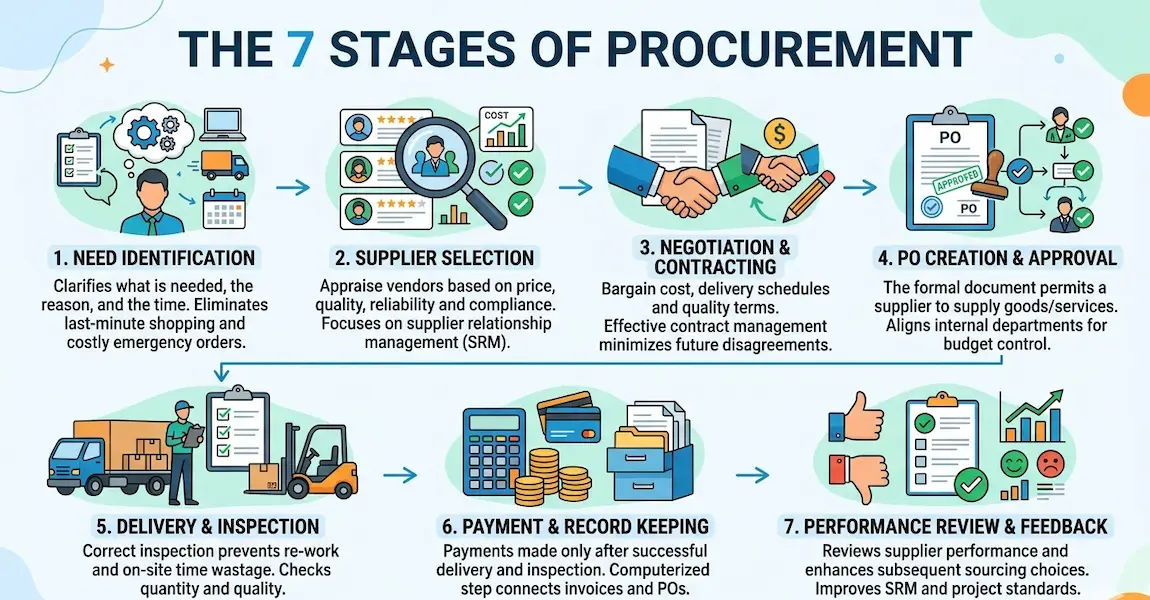
The 7 Stages of Procurement
The following is a breakdown of how the structured procurement lifecycle ensures the operations in the supply chain are smooth and cost-effective:
1. Need Identification
Any procurement begins with a clear need. It may be a collection of building materials, safety equipment or an FF&E (Furniture, Fixtures and Equipment) order.
This step clarifies what is needed, the reason why it is needed, and the time when it has to be provided. Good start here will eliminate last-minute shopping and costly emergency orders.
2. Supplier Selection
The second thing that has to be done after the need is defined is to select the appropriate supplier.
Teams appraise the vendors based on price, quality, reliability and compliance. In this phase, the supplier relationship management (SRM) is critical in order to make it reliable and trusted over time.
3. Negotiation and Contract Management
Supplier negotiation is next after shortlisting suppliers, where cost, delivery schedules and quality terms are bargained.
Effective contract management means every agreement is written, so there are fewer future disagreements and misunderstandings.
4. Purchase Order (PO) Creation and Approval
The purchase order is the formal document that permits a supplier to supply goods or services.
An open purchase order lifecycle can assist the two parties in monitoring the order progress, approvals, dispatch and payment. It is also a step to align the internal departments so that budget control is realized before any commitment is made.
5. Delivery and Inspection
After materials are received, they are checked by the procurement team, where their quality and quantity are checked. Correct inspection prevents re-work and on-site time wastage, particularly important in construction and FF&E projects.
The efficiency of the supplier network in the supply chain management system is also important for the delivery time.
6. Payment and Record Keeping
The payments are made only after successful delivery and inspection.
This step has been computerized and connects invoices and POs to ensure that there are no duplicate or omitted entries. It is a very basic yet essential element of establishing long-term trust in the vendors.
7. Performance Review and Supplier Feedback.
Procurement does not finish with payment. The loop is finished by reviewing supplier performance.
Such feedback enhances subsequent sourcing choices, enhances SRM, and provides a supplier with adherence to project standards.
Why This Process Matters
An effective procurement procedure conserves time, avoids wastage and manages expenses, which are crucial in the contemporary global construction arena.
The Hackett Group (2024), through Supply Chain Dive, indicated that 96% greater savings were achieved by companies with sophisticated procurement technology.
That is a big difference, and it tells how a digital, step-by-step purchasing cycle directly promotes effectiveness and budget achievement.
Having a transparent and automated setup of the workflows, the managers would be able to monitor all the steps involved, starting with the negotiation with the supplier and delivery in real-time. This removes guesses, enhances accountabilities and minimizes chances of project sluggishness.
How Omni Build Pro Ensures On-Time Delivery
Clear SRM policies and tech-driven approval systems are important in the procurement workflow of Omni Build Pro.
This keeps the procurement and project teams in communication, so we do not have to rework things, and each item is delivered at the time it is required. We also make use of constant feedback from suppliers who use data from past orders to predict risks before they occur. That is how we maintain quality control and safeguard project schedules.
To readers with a wider interest in the strategy behind these processes, you may also be interested in reading our approach to Strategic Procurement Management, where we delve further into how planning, partnerships and automation work to generate quantifiable savings on a project-by-project basis.
Want a stronger procurement supply chain strategy?
Our specialists optimize sourcing for better results.
Procurement Strategies in Supply Chain Management: Driving Savings & Performance
Procurement is no longer merely a matter of purchasing, but it is a matter of smart purchasing. As global costs of construction and disruption of supply chains have increased, Procurement Strategies in Supply Chain Management have emerged as the pillars of sustainable savings and steady performance.
The businesses of 2025 are discovering that efficient procurement does not merely contain costs, but it also creates resilience. This has been our personal experience at Omni Build Pro: each intelligent sourcing choice today avoids project delays and unwarranted costs tomorrow.
Category Management and Strategic Sourcing
Strategic sourcing is one of the most powerful cost control strategies as it involves selecting suppliers with long-term value, rather than short-term price. It involves the consideration of the total cost of ownership (TCO), delivery reliability, and supplier innovation potential.
Simultaneously, category management divides procurement into rational categories (such as equipment, materials, or subcontracted services). The strategic management of such categories might result in significant savings.
Indeed, a 2025 report by Concord has discovered that category management can achieve 10-15% cost reductions in cases where it is practiced at all times.
Our procurement teams at Omni Build Pro leverage this strategy to optimize bulk buys and have each material group aligned to our project pipeline.
Cost-saving strategies that actually work
Contemporary procurement units are also concerned with intelligent savings and not merely cost reduction. Here’s how:
- Purchasing in bulk to benefit from economies of scale.
- Framework contracts to fix prices over longer periods and minimize inflation risk.
- Supplier performance analysis to determine which is the most reliable supplier and minimize rework or returns.
These strategies are more essential than ever as inflation has forced 40 % of companies to spend more on sourcing (CorexCorp, 2024).
They not only lower costs but also enhance predictability and performance throughout the supply chains.
Embracing Digital Procurement Strategy
The digital transformation has become the core of procurement success. E-procurement solutions and automation simplify all tasks, starting with supplier registration, up to payment monitoring, which makes procurement compliance and transparency at each stage as simple as possible.
These computer applications assist in monitoring procurement measures and key performance indicators that include:
- Lead time efficiency
- Supplier delivery performance.
- Cost per purchase order
Through automation of repetitive tasks, the teams can spend more time on the analysis and strategy instead of paperwork. This is exactly what the Procurement Services of Omni Build Pro will offer, which will combine e-procurement systems to provide cost control, audit preparedness and quick approvals on international projects.
Risk Control and Resilience in Procurement: Safeguarding the Supply Chain
Procurement not only saves money, but it secures it. Risk management and resilience in procurement have nowadays become a must in the uncertain world to maintain supply chains in a steady and predictable manner. One little risk can manipulate the whole project schedule, whether it is an inflation, a supplier going bankrupt, or a shipment that is suddenly missed.
At Omni Build Pro, we have discovered that the best procurement strategy is not only about negotiating the best prices but about creating a system that can absorb the shock.
Understanding Procurement Risks
Procurement problems are a challenge to every organization, yet the key to winning the battle is in understanding their origin.
NetSuite (2025) lists four broad categories of procurement risks:
- Economic Risks: A sudden increase in price, bankruptcy of suppliers, or the lack of raw materials.
- Environmental risks: weather extremes, traffic hold-ups or sustainability regulations.
- Political Risks: import/export trade prohibitions, trade sanctions or regional insecurity.
- Ethical Risk: no supplier transparency, workforce exploitation, or insecure work environment.
One of these interruptions in any of the areas may impact project delivery and profitability in the long-term.
Indicatively, during the period when international freight costs increased in 2024, the construction firms that had diversified suppliers did not suffer any setback. Other companies experienced cost increases of 20-30% just because they had single-source suppliers.
Practical Tools for Risk Mitigation
Powerful procurement teams do not avoid risk; they are ready to face it. The following are some of the established tools deployed throughout the industry (and validated by our own teams at Omni Build Pro):
1. Dual Sourcing
Always have a backup. Having at least two suppliers with whom you have signed and sealed agreements per category ensures that your project is not jeopardized in case of failure by one of the suppliers.
It is a basic tactic, yet it helps construction timetables not to crumble when some unforeseen delays occur.
2. Supplier Audits and Analysis of Performance
The constant analysis of supplier performance is done to ensure that the vendors are of quality, compliant, and on-time.
Ethical procurement is also enhanced by the use of an audit, which involves worthwhile sources used to get materials.
3. Inventory Management Buffers
Intelligent inventory control serves as a backup. Even having a small buffer of the required materials will prevent the downtime of the project in case of disruptions in logistics.
This, coupled with digital dashboards to provide visibility to the supply chain, keeps everyone updated, including site managers and finance teams.
4. Quality Control of Procurement.
Raise queries about the quality of materials before accepting them because quality is agreed upon. Inequality in quality is not only a waste of funds, but in the future, it may result in rework and jeopardize safety concerns.
The role of technology in Supply Chain Resilience
One of the largest barriers to procurement risk is now data-driven visibility.
An arXiv study (2016) has discovered that visibility applications decreased the price per commodity worth by 58 to 50 %, evidence that understanding where supplies are, and when they will be conveyed, is economical and forestalls distress.
Digital supply chain visibility enables the procurement managers to monitor the shipment, anticipate disruptions and act in advance before the delay can set in. This proactive model establishes supply chain resilience, which makes all projects run without problems even in cases where external conditions vary.
In Omni Build Pro, data analytics, supplier performance tracking, and predictive modeling teams unite to identify the risk at an early stage. That is why we have managed to maintain the projects in infrastructure up to Energy Sector Procurement and keep them running smoothly despite the uncertainty across the world.
Building a Culture of Resilience
Risk management does not occur on a single occasion. It is a continuous practice that is based on three pillars:
- Visibility: never be uncertain about what is going on in your supply chain.
- Preparedness: keep secondary suppliers and non-restrictive contracts.
- Responsibility: make every stakeholder practise ethical and transparent procurement.
With this in mind, Omni Build Pro will make opportunities out of any challenge and will build systems that will adapt, recover, and remain effective, regardless of what the global market throws at them.
Technology and Automation in Procurement: Building Smarter Supply Chains
Technology in modern supply chains is not a convenience, but a control center. Procurement automation has transformed the previously lengthy and tedious paperwork into speedy and data-driven accuracy, including automated purchase orders and predictive supplier dashboards.
Procurement automation implies that it will take less time to run after approvals and more time to make intelligent sourcing decisions. And in the modern world of construction, speed, precision, and transparency are all that matter.
Why Procurement Automation Matters
All projects start with dozens of small choices, what to purchase, when to purchase and whom to purchase. They were traditionally processed manually via e-mail, spreadsheets or paper forms. Manual systems are, however, slow and subject to human error.
This is where e-procurement and information systems in SCM (Supply Chain Management) come in. The systems are integrated to provide one digital workflow that links all the stages of the procurement process, including payment requests.
The following are the things that automation immediately enhances:
- Minimizes PO errors: E-commerce confirms supplier information and item numbers prior to authorization.
- Quickens approvals: No longer wait to get signatures. The e- approvals are automatically forwarded to the appropriate managers.
- Enhances traceability: All purchases can be monitored between requisition and payment on a real-time basis.
With the tighter global supply chains, automation provides the flexibility to act fast and not to lose control.
The Omni Build Pro Way
In Omni Build Pro, we have centralized digital dashboards that are used to control procurement activities in different regions.
“The project procurement teams at Omni Build Pro use centralized digital dashboards to track the performance and lead times of suppliers.”
Smart Procurement = smarter Supply Chain Network
An interrelated supply chain network is based on visibility and mutual information. The network created by procurement technology is one that integrates purchasing, logistics, and finance.
This is how it will be beneficial to each layer:
- For Procurement Teams: Procurement scoring and benchmarking automation using real-time procurement metrics.
- For Finance: Real-time cost tracking to enhance budgeting and compliance reporting.
- For Project Managers: Good understanding of the material availability and when it is likely to be delivered.
The result? A more intelligent, lean and predictive project pipeline.
Data and Sustainability go Hand in hand.
McKinsey (2023) says that Procurement performance investment helps organizations to be de-risked, decarbonised, and their largest cost base optimised.
Digital tools not only enhance speed, but they also assist companies in minimizing wastage, managing emissions, as well as make sustainable sourcing choices. Procurement is also involved in green construction objectives by monitoring supplier sustainability ratings and energy footprints.
Automation will enable Omni Build Pro to not only compare suppliers based on their prices and quality but also based on their sustainability performance. This can be used to ensure that the environment standards of the world are followed in the long term.
From Manual to Intelligent Procurement
The leap between the manual and the automated procurement might seem like a great one to make, yet the payoffs are evident:
- Real-time visibility
- Finalized delivery schedules.
- Fewer payment delays
- Lower operational costs
Automation also helps reinforce the coordination of suppliers in FF&E projects, where furniture, fixtures and equipment must pass through time and quality checks. We do this through the Supplier Coordination of FF&E Projects program, where we digitally track the performance of suppliers to match site readiness without causing time wastage to the completion of the project.
Case-Based Examples: Applying Procurement Strategies in Construction Projects
There is no universal procurement in construction. Each and every project, be it hotels, an office tower, or any other one, is full of challenges, suppliers, and time constraints. The following illustrations indicate how smart sourcing, ethical procurement, and reverse logistics can revolutionize the results of the construction supply chain.
Example 1: FF&E Procurement for Hotel projects
One of the most complicated phases of the hospitality construction is furnishing, Fixtures & Equipment (FF&E) procurement. It deals with hundreds of small and high-value products, including high-quality furniture, lighting, and decor.
Our procurement department in one of the hotel development projects of Omni Build Pro had tight deadlines and changing costs of shipping around the world. To remain competitive, we used a strategic sourcing method that involved prequalifying several suppliers across various regions to prevent relying on one supplier.
This two-source setup enabled our team to compare shipping schedules, currency rates and custom lead times in real time. In addition to cost, the strategy also favored ethical procurement by choosing suppliers that adhered to the standards of environmental compliance and safety in the workplace.
Get to know more about our take on hospitality project procurement through our Procurement Strategies of Hospitality Projects, where all FF&E choices are made in the direction of efficiency, sustainability, and design harmony.

Example 2: Office Buildout using Reverse Logistics
Procurement does not stop when the materials have reached the site; it goes on until all the remaining or reused materials have been utilized properly. In one of our corporate office expansions, the issue arose after installation: how to dispose of returned material and unused fittings without generating more waste.
We did not throw them or sell them at a loss, but followed a reverse logistics process. This involved examining, listing, and sending back goods to suppliers in order to be given credit to be used in other projects.
Through this system, we:
- Reduced material waste by 12%
- Reclaimed value of returned light and fixture units.
- Reduced the post-project close-out by two weeks.
Sustainable and Ethical Procurement in Practice
The new construction procurement is not merely about cost and timing but about responsibility. Each purchase carries an ecological and a social impact.
The procurement teams in Omni Build Pro incorporate the concept of sustainable sourcing policies that focus on:
- Green certified materials (FSC, LEED-compliant materials)
- Verified supplier ethics by the mean of supplier audits.
- Local sourcing, where feasible, to minimize transportation emissions.
Conclusion — Strengthening Supply Chains Through Smart Procurement
Procurement is not a process only. It is the unspoken power that propels any construction work to completion. In contemporary supply chain management, procurement determines the level of efficiency with which a company will be able to manage costs, minimise risks, and deliver on schedule.
Procurement decisions are also good starting points for every successful project. It relates planning to real-life implementation in the areas of supplier selection and deliveries. When procurement is conducted in a strategic manner, it has enabled projects to be on time, reduced wasting, and all purchases made must be value-adding and not merely a cost.
Procurement as a Strategic Driving Force
Previously, procurement has been considered to be an easy buying exercise. Today, however, it is much more influential. It is now a strategic driver that affects profitability, sustainability, long term resiliency.
By adopting procurement within the wider supply chain management model, businesses are able to have better control and visibility. They are able to predict demand, control supplier performance, and react more quickly to disruptions.
We have witnessed the transformative effect of this integration at Omni Build Pro. Cooperation between procurement teams and project managers enhances deliveries, stabilizes costs, and ensures quality remains constant to clients. Every decision is an ingredient of an interdependent, transparent and value-oriented supply chain.
Visibility, Savings, and Resilience
Good procurement brings about balance, the ideal combination of visibility, savings and resilience.
- Visibility assists teams to track the performance of suppliers, shipment and cost fluctuation in real-time.
- Good sources of savings are not a single instance of discounts, but strategic sourcing, category management, and framework agreements.
- Resilience provides business continuity in times of market disturbances or price changes.
McKinsey states that nearly 9 out of 10 companies have reported supply chain disruption in the past few years, yet the companies that have developed a mature procurement system have rebounded at a lesser cost and within a shorter time. The moral of the story is that procurement is not about purchasing; it is about budgeting and getting ready beforehand.
The Role of Technology
Efficiency has been reconfigured under procurement technology. It is now possible to trace all the transactions the way they are made in a request through to payment with the help of automated workflows, e-approvals, and digital dashboards.
At Omni Build Pro, we have established this digital foundation in our operations. Through our centralized procurement systems, we are able to have full supply chain visibility, and every order can be traced, audited and delivered with accuracy.
Building the Future of Procurement
The future of the procurement process is transparency and collaboration. It is about engineering mechanisms where the clients, the contractors and the suppliers exchange information and are geared towards the achievement of a common goal, efficiency, quality and sustainability.
Intelligent procurement is more cost-effective, though it goes beyond that as it establishes trust and long-term relationships. It also coincides with the overall mission of Omni Build Pro, which is to provide End-to-End Construction Solutions, including sourcing and final delivery with precision, accountability and ingenuity.
At Omni Build Pro, our procurement departments are in control of the entire supply chain operations with precision and integrity. We assist our clients in being efficient without taking risks so that every project can be completed efficiently. When procurement is smarter, the whole supply chain is stronger.
Frequently Asked Questions
What is the difference between procurement and supply chain management?
Procurement and supply chain management (SCM) usually collaborate, yet they have diverse functions. Procurement is concerned with the process of purchasing and procuring goods and services, identifying requirements, choosing the suppliers, contract negotiation and making purchases. Supply chain management, however, takes into consideration the entire movement of information and goods, which includes raw materials to end delivery.
How does strategic procurement contribute to cost savings and total cost of ownership (TCO)?
Strategic procurement transcends searching for the lowest bid; it is about developing long-term value. Companies will be able to greatly decrease the total cost of ownership (TCO) by analyzing supplier performance, lifecycle costs and efficiency of delivery.
Here’s how it works:
- Strategic sourcing establishes trustworthy suppliers who deliver quality rather than low prices.
- Category management standardizes the purchases to have more bargaining power.
- Volume purchases and structure deals fix prices.
Concord (2025) found that the cost savings of up to 15% were obtained by firms with structured category management. Strategic procurement, thus, secures budgets and makes sure that each purchase is made to bring stability to the operations, not only temporary savings.
What are the key risk-mitigation strategies in procurement for supply chain resilience?
- The main risk management plans are:
- Dual sourcing: Not being reliant on a single supplier.
- Supplier audits: Diligence of reliability, financial solvency and ethics.
- Inventory buffers: Storing of materials of critical materials.
- Digital visibility solutions: Real-time supplier health and logistics.
Which procurement metrics and KPIs should construction-project teams track?
Monitoring the procurement performance makes projects lean and clear. The best procurement measures and KPI used in the construction process are:
- Cost savings realized against the target.
- Supplier on-time delivery rate.
- PO (Purchase Order) cycle time
- Supplier defect rate
- Procurement ROI (return on Investment)
How can digital procurement tools and automation improve supply chain visibility and effectiveness?
Digital procurement is changing the way companies are operating in relation to supply chains. Automation tools decrease manual data entry, approval delays, and errors in a way that provides teams with a greater amount of time to concentrate on the strategy.